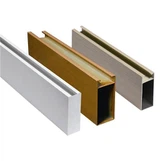
As a supplier of aluminum rectangular tubes, I've witnessed firsthand the remarkable advantages these products offer across a wide range of industries. Aluminum rectangular tubes have become a staple in modern construction, manufacturing, and design due to their unique combination of properties. In this blog, I'll delve into the numerous benefits of using aluminum rectangular tubes and explain why they are the preferred choice for many applications.

Lightweight Nature
One of the most significant advantages of aluminum rectangular tubes is their lightweight nature. Aluminum has a density of approximately 2.7 g/cm³, which is about one-third that of steel. This low density makes aluminum rectangular tubes easy to handle, transport, and install, reducing labor costs and the need for heavy machinery. For example, in the construction of high-rise buildings, using aluminum rectangular tubes can significantly reduce the overall weight of the structure, minimizing the load on the foundation and potentially saving on construction costs. In the automotive industry, the use of aluminum rectangular tubes helps to reduce the weight of vehicles, improving fuel efficiency and performance.
High Strength-to-Weight Ratio
Despite their low weight, aluminum rectangular tubes possess a high strength-to-weight ratio. This means that they can withstand significant loads and stresses while remaining relatively lightweight. Aluminum alloys used in the production of rectangular tubes, such as 6061 T6 and 7050, offer excellent mechanical properties, including high tensile strength and good ductility. The 6061 T6 Aluminum Rectangular Tubing is known for its versatility and is widely used in structural applications, such as frames, supports, and trusses. The 7050 Aluminium Rectangular Tube is a high-strength alloy that is often used in aerospace and military applications, where strength and durability are critical.

Corrosion Resistance
Aluminum has a natural oxide layer that forms on its surface when exposed to air, providing excellent corrosion resistance. This oxide layer acts as a protective barrier, preventing the underlying metal from coming into contact with moisture and other corrosive elements. As a result, aluminum rectangular tubes are highly resistant to rust and corrosion, making them suitable for use in outdoor and harsh environments. In marine applications, for example, aluminum rectangular tubes are commonly used in the construction of boats, docks, and offshore structures, where they are exposed to saltwater and other corrosive substances. The 6063 Aluminum Rectangular Tube is particularly well-suited for architectural applications, as it has a smooth surface finish and good corrosion resistance, making it ideal for use in building facades, window frames, and door frames.
Thermal Conductivity
Aluminum is an excellent conductor of heat, with a thermal conductivity of approximately 205 W/(m·K). This high thermal conductivity makes aluminum rectangular tubes ideal for use in heat transfer applications, such as radiators, heat exchangers, and cooling systems. In automotive engines, aluminum rectangular tubes are used in the construction of radiators to dissipate heat efficiently, helping to keep the engine cool and operating at optimal temperatures. In industrial applications, aluminum rectangular tubes are used in heat exchangers to transfer heat between two fluids, improving energy efficiency and reducing operating costs.
Electrical Conductivity
In addition to its high thermal conductivity, aluminum is also a good conductor of electricity. Aluminum rectangular tubes are commonly used in electrical applications, such as electrical enclosures, busbars, and wiring conduits. The high electrical conductivity of aluminum allows for efficient transmission of electrical current, reducing energy losses and improving the performance of electrical systems. In the telecommunications industry, aluminum rectangular tubes are used in the construction of antenna towers and base stations, where they provide a lightweight and corrosion-resistant solution for supporting electrical equipment.
Formability and Machinability
Aluminum rectangular tubes are highly formable and can be easily bent, welded, and machined to meet specific design requirements. This makes them a versatile material for a wide range of applications, from simple structural components to complex architectural designs. Aluminum can be formed into various shapes and sizes using processes such as extrusion, rolling, and forging. In the manufacturing industry, aluminum rectangular tubes are often used to produce custom-made parts and components, such as brackets, frames, and housings. The ease of machining aluminum also allows for precise and accurate fabrication, ensuring high-quality products.
Aesthetic Appeal
Aluminum rectangular tubes have a clean and modern appearance, making them a popular choice for architectural and design applications. The smooth surface finish of aluminum can be further enhanced through processes such as anodizing, powder coating, or painting, providing a wide range of color options and finishes to suit different design preferences. In interior design, aluminum rectangular tubes are used in the construction of furniture, partitions, and decorative elements, adding a touch of elegance and sophistication to the space. In exterior architecture, aluminum rectangular tubes are used in the construction of building facades, canopies, and signage, creating a visually appealing and contemporary look.

Recyclability
Aluminum is a highly recyclable material, with a recycling rate of over 90%. Recycling aluminum requires only 5% of the energy needed to produce new aluminum from bauxite ore, making it an environmentally friendly choice. When aluminum rectangular tubes reach the end of their useful life, they can be easily recycled and reused to produce new products. This not only reduces the demand for virgin materials but also helps to conserve energy and reduce greenhouse gas emissions. As a supplier of aluminum rectangular tubes, I am committed to promoting sustainable practices and encouraging our customers to choose aluminum for its recyclability and environmental benefits.
Cost-Effectiveness
When considering the total cost of ownership, aluminum rectangular tubes offer a cost-effective solution for many applications. While the initial cost of aluminum may be higher than some other materials, such as steel, the long-term savings in terms of reduced maintenance, lower energy consumption, and increased durability can offset the initial investment. The lightweight nature of aluminum also reduces transportation and installation costs, further contributing to the overall cost-effectiveness of using aluminum rectangular tubes.
In conclusion, the advantages of using aluminum rectangular tubes are numerous and significant. From their lightweight nature and high strength-to-weight ratio to their corrosion resistance, thermal and electrical conductivity, formability, aesthetic appeal, recyclability, and cost-effectiveness, aluminum rectangular tubes offer a versatile and sustainable solution for a wide range of applications. As a supplier of aluminum rectangular tubes, I am proud to offer high-quality products that meet the needs of our customers. If you are interested in learning more about our aluminum rectangular tubes or would like to discuss your specific requirements, please feel free to contact us. We look forward to the opportunity to work with you and provide you with the best aluminum solutions for your projects.
References
- ASM Handbook, Volume 2: Properties and Selection: Nonferrous Alloys and Special-Purpose Materials, ASM International.
- Aluminum Association, Aluminum Design Manual.
- Modern Aluminum: Technology and Applications, Edited by J. F. Grandfield and M. J. Bibby.