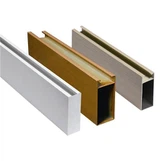
Hey there! As a supplier of Aluminum Solid Panels, I often get asked about various properties of these panels. One question that pops up quite a bit is, "What is the sound absorption coefficient of aluminum solid panels?" Let's dive right into it and break down this topic.
First off, let's understand what the sound absorption coefficient means. In simple terms, it's a measure of how well a material can absorb sound. A coefficient of 0 means the material reflects all the sound, while a coefficient of 1 means it absorbs all the sound. Most materials fall somewhere in between these two extremes.
Now, when it comes to aluminum solid panels, their sound absorption coefficient isn't extremely high on its own. Aluminum is a dense and rigid metal, and by nature, dense and rigid materials are better at reflecting sound rather than absorbing it. Typically, the sound absorption coefficient of bare aluminum solid panels is quite low, usually in the range of 0.01 - 0.1 at most frequencies.
But here's the thing. Just because the base aluminum solid panel doesn't have great sound - absorbing properties doesn't mean we can't do something about it. There are several ways to enhance the sound absorption of these panels.
One common method is to add a sound - absorbing material to the aluminum panel. For example, we can attach a layer of acoustic foam or fiberglass insulation to the back of the panel. These materials have much higher sound absorption coefficients compared to aluminum. When combined with the aluminum panel, they can significantly improve the overall sound - absorbing performance of the structure.
Another approach is to design the panel with special perforations. Perforated aluminum solid panels can create a resonance effect. When sound waves hit the perforated surface, they enter the holes and cause the air inside the panel to vibrate. This vibration dissipates the sound energy, increasing the sound absorption coefficient. The size, spacing, and depth of the perforations all play a role in determining how well the panel will absorb sound.
The applications of aluminum solid panels in sound - related scenarios are quite diverse. In architectural settings, they can be used for interior wall cladding. Cladding Flexible Stone Grain Aluminum Panels are a great option for this. They not only provide an aesthetically pleasing look but can also be customized to improve sound absorption. For instance, in offices, better sound absorption can reduce noise distractions, making the working environment more comfortable.
In industrial facilities, Aluminum Siding Panel Sheet can be used on the exterior of buildings. By enhancing their sound absorption, we can reduce the noise pollution that the facility might generate and also protect the interior from external noise.
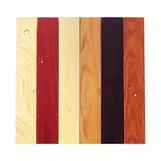
For high - end commercial buildings, Curtain Wall Wood Grain Aluminium Veneer can be used in curtain walls. These panels can be designed to improve the acoustic environment inside the building while maintaining an elegant appearance.


When we talk about measuring the sound absorption coefficient of aluminum solid panels, there are specific standards and methods. The most common standard used is the ASTM C423 test method. In this test, a sample of the panel is placed in a reverberation room, and the sound decay rate is measured before and after the sample is introduced. Based on these measurements, the sound absorption coefficient can be calculated at different frequencies.
It's also important to note that the sound absorption coefficient can vary depending on the frequency of the sound. Different frequencies of sound interact with the panel in different ways. For example, low - frequency sounds are generally harder to absorb than high - frequency sounds. So, when we're designing aluminum solid panels for sound absorption, we need to consider the specific frequency range of the noise we're trying to address.
In conclusion, while the base aluminum solid panel has a relatively low sound absorption coefficient, there are numerous ways to enhance its sound - absorbing capabilities. Whether it's through adding sound - absorbing materials or using special perforation designs, we can customize these panels to meet the specific acoustic needs of different applications.
If you're in the market for aluminum solid panels and have questions about their sound absorption or any other properties, don't hesitate to reach out. We're here to help you find the perfect solution for your project. Whether it's for a small home renovation or a large - scale commercial building, we've got the expertise and the products to make it happen. So, let's start a conversation and see how we can work together to meet your requirements.
References
- ASTM International. ASTM C423 - 22: Standard Test Method for Sound Absorption and Sound Absorption Coefficients by the Reverberation Room Method.
- Beranek, Leo L. Acoustics. American Institute of Physics, 1986.
- Noise Reduction Coefficient (NRC) and Sound Absorption Basics, available from various industry publications on acoustics.