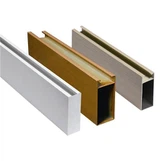
Hey there! As a supplier of Aluminium 6061 T6 Plate, I often get asked about the dimensional accuracy of this popular material. So, I thought I'd write a blog post to shed some light on this topic.
First off, let's talk a bit about what Aluminium 6061 T6 Plate is. It's a heat-treated, precipitation-hardened aluminum alloy that's known for its excellent strength, corrosion resistance, and machinability. It's widely used in various industries, including aerospace, automotive, marine, and construction. You can find more details about 6061 T6 Aluminum Sheet and Aluminium 6061 T6 Plate on our website.
Now, let's get to the main question: what is the dimensional accuracy of Aluminium 6061 T6 Plate? Dimensional accuracy refers to how closely the actual dimensions of a material match the specified dimensions. In the case of Aluminium 6061 T6 Plate, the dimensional accuracy can vary depending on several factors.
Factors Affecting Dimensional Accuracy
Manufacturing Process
The manufacturing process plays a crucial role in determining the dimensional accuracy of Aluminium 6061 T6 Plate. The plate is typically produced through a series of processes, including casting, rolling, heat treatment, and machining. Each step in the process can introduce some degree of variation in the dimensions.
For example, during the casting process, the molten aluminum is poured into a mold to form the initial shape of the plate. Any irregularities in the mold or variations in the pouring process can lead to differences in the thickness and flatness of the plate. Similarly, the rolling process, which involves passing the plate through a series of rollers to reduce its thickness, can also affect the dimensional accuracy. If the rollers are not properly calibrated or if there is uneven pressure during rolling, the plate may end up with non-uniform thickness or surface defects.
Heat Treatment
Heat treatment is an important step in the production of Aluminium 6061 T6 Plate as it helps to improve the material's strength and hardness. However, it can also have an impact on the dimensional accuracy. When the plate is heated and cooled during the heat treatment process, it undergoes thermal expansion and contraction. If the heat treatment is not carefully controlled, these thermal changes can cause the plate to warp or distort, resulting in dimensional variations.
Machining Operations
Machining operations, such as cutting, drilling, and milling, are often performed on Aluminium 6061 T6 Plate to achieve the desired shape and size. These operations can also affect the dimensional accuracy. For instance, if the cutting tools are not sharp or if the machining parameters are not set correctly, it can lead to rough surfaces, burrs, or inaccurate dimensions.
Typical Dimensional Tolerances
Despite these potential factors that can affect dimensional accuracy, the industry has established certain standards for the dimensional tolerances of Aluminium 6061 T6 Plate. These tolerances specify the acceptable range of variation in the dimensions of the plate.


Thickness Tolerance
The thickness tolerance of Aluminium 6061 T6 Plate typically ranges from ±0.005 inches to ±0.030 inches, depending on the thickness of the plate. Thinner plates generally have tighter tolerances, while thicker plates may have slightly wider tolerances. For example, a plate with a thickness of 0.125 inches may have a thickness tolerance of ±0.005 inches, while a plate with a thickness of 1.000 inches may have a tolerance of ±0.030 inches.
Width and Length Tolerance
The width and length tolerances of Aluminium 6061 T6 Plate are usually specified as a percentage of the nominal dimension. For example, the width tolerance may be ±0.125 inches for plates up to 48 inches wide and ±0.250 inches for plates wider than 48 inches. The length tolerance is typically ±0.250 inches for plates up to 120 inches long and ±0.500 inches for plates longer than 120 inches.
Flatness Tolerance
Flatness is an important aspect of dimensional accuracy, especially for applications where the plate needs to be mounted or used in a flat surface. The flatness tolerance of Aluminium 6061 T6 Plate is typically specified as the maximum deviation from a perfectly flat surface over a given length or area. For example, the flatness tolerance may be 0.030 inches per foot of length or 0.060 inches over a 4-foot by 8-foot sheet.
Ensuring Dimensional Accuracy
As a supplier of Aluminium 6061 T6 Plate, we take several measures to ensure the dimensional accuracy of our products.
Quality Control
We have a strict quality control system in place to monitor every step of the manufacturing process. Our quality control team uses advanced measuring tools and techniques to check the dimensions of the plates at various stages of production. This includes using calipers, micrometers, and coordinate measuring machines (CMMs) to measure the thickness, width, length, and flatness of the plates. Any plates that do not meet the specified dimensional tolerances are rejected or reworked to ensure that only high-quality products are delivered to our customers.
Precision Manufacturing
We invest in state-of-the-art manufacturing equipment and technologies to ensure precise and consistent production. Our rolling mills are equipped with advanced control systems that can accurately control the thickness and flatness of the plates. Our machining centers are programmed with high-precision cutting paths to ensure accurate dimensions and smooth surfaces.
Customization
We understand that different customers may have different requirements for the dimensional accuracy of Aluminium 6061 T6 Plate. That's why we offer customization services to meet the specific needs of our customers. Whether you need a plate with tighter tolerances or a custom size and shape, we can work with you to achieve the desired results.
Why Dimensional Accuracy Matters
Dimensional accuracy is crucial in many applications where Aluminium 6061 T6 Plate is used. Here are some reasons why:
Fit and Assembly
In applications where the plate needs to be assembled with other components, dimensional accuracy is essential to ensure a proper fit. If the plate is too thick or too thin, too wide or too narrow, it may not fit correctly with the other parts, leading to assembly problems and potential performance issues.
Functionality
The dimensional accuracy of the plate can also affect its functionality. For example, in aerospace applications, where weight and strength are critical, even small variations in the dimensions of the plate can have a significant impact on the performance of the aircraft. Similarly, in automotive applications, the dimensional accuracy of the plate is important for ensuring proper alignment and operation of the vehicle's components.
Aesthetics
In some applications, the appearance of the plate is also important. Dimensional accuracy can help to ensure a smooth and uniform surface finish, which can enhance the aesthetics of the final product.
Contact Us for Your Aluminium 6061 T6 Plate Needs
If you're in the market for high-quality Aluminium 6061 T6 Plate with excellent dimensional accuracy, look no further. As a trusted supplier, we have the expertise and resources to provide you with the best products and services. Whether you need a small quantity for a prototype or a large volume for a production project, we can meet your requirements.
Don't hesitate to reach out to us if you have any questions or need more information about our Aluminium 6061 T6 Plate. We're here to help you find the right solution for your specific needs. Let's start a conversation and see how we can work together to achieve your goals.
References
- ASM Handbook Volume 2: Properties and Selection: Nonferrous Alloys and Special-Purpose Materials
- Aluminum Association Standards and Data
- Machinery's Handbook