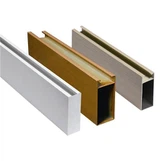
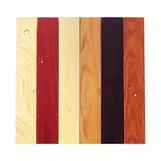
The coefficient of friction is a crucial parameter in many engineering and construction applications, especially when it comes to materials like aluminum solid panels. As a leading supplier of Aluminum Solid Panels, I've had numerous inquiries about the coefficient of friction of these panels. In this blog, I'll delve into what the coefficient of friction is, how it applies to aluminum solid panels, and its significance in various scenarios.
Understanding the Coefficient of Friction
The coefficient of friction is a dimensionless quantity that represents the ratio of the force of friction between two surfaces to the normal force pressing the two surfaces together. It is denoted by the Greek letter μ (mu). There are two main types of coefficients of friction: static and kinetic.
The static coefficient of friction (μs) is the ratio of the maximum frictional force that can be exerted between two non - moving surfaces to the normal force. It determines the force required to start an object moving on a surface. On the other hand, the kinetic coefficient of friction (μk) is the ratio of the frictional force between two surfaces in relative motion to the normal force. It represents the force needed to keep an object moving at a constant speed on a surface.
Mathematically, the frictional force (Ff) can be calculated using the following formulas:
For static friction: Ff ≤ μs * N
For kinetic friction: Ff = μk * N
where N is the normal force perpendicular to the contact surface.
Coefficient of Friction of Aluminum Solid Panels
The coefficient of friction of aluminum solid panels depends on several factors, including the surface finish of the panels, the material they are in contact with, and the environmental conditions.
Surface Finish
Aluminum solid panels can have different surface finishes, such as smooth, brushed, or textured. A smooth surface finish generally has a lower coefficient of friction compared to a textured or brushed finish. For example, a highly polished aluminum panel may have a static coefficient of friction of around 0.3 - 0.4 when in contact with a smooth steel surface. In contrast, a textured aluminum panel designed for better grip may have a static coefficient of friction of 0.6 - 0.8 under the same conditions.


Contact Material
The material that the aluminum solid panel is in contact with also significantly affects the coefficient of friction. When in contact with another metal, such as steel or copper, the coefficient of friction will be different compared to when it is in contact with a non - metal like rubber or plastic. For instance, the coefficient of friction between aluminum and rubber is typically higher than between aluminum and steel. This is because rubber has a higher tendency to deform and conform to the surface of the aluminum panel, increasing the frictional force.
Environmental Conditions
Environmental factors such as temperature, humidity, and the presence of contaminants can also influence the coefficient of friction. High temperatures can cause the aluminum panel to expand slightly, altering its surface properties and potentially changing the coefficient of friction. Humidity can introduce a thin layer of moisture between the surfaces, which can either increase or decrease the frictional force depending on the materials involved. Contaminants like dirt, oil, or grease can act as lubricants, reducing the coefficient of friction.
Significance in Different Applications
Construction
In construction, the coefficient of friction of aluminum solid panels is important for several reasons. For example, when using Aluminum Siding Panel Sheet on the exterior of a building, the coefficient of friction affects the panel's ability to stay in place during high - wind conditions. A higher coefficient of friction between the panels and the mounting structure can prevent the panels from sliding or being dislodged.
In curtain wall systems, such as Curtain Wall Wood Grain Aluminium Veneer, the coefficient of friction between the panels and the supporting framework is crucial for the overall stability and safety of the structure. If the coefficient of friction is too low, the panels may shift or detach, posing a risk to the building occupants.
Interior Design
In interior design applications, the coefficient of friction of aluminum solid panels can impact their functionality and user experience. For example, in flooring applications, a higher coefficient of friction is desirable to prevent slips and falls. Textured aluminum panels can be used in areas where safety is a concern, such as staircases or wet areas.
Industrial Applications
In industrial settings, aluminum solid panels are often used in conveyor systems, machinery, and equipment. The coefficient of friction between the panels and the conveyed materials or moving parts affects the efficiency and performance of the system. A proper balance of friction is required to ensure smooth movement without excessive wear or slippage.
Measuring the Coefficient of Friction
There are several methods to measure the coefficient of friction of aluminum solid panels. One common method is the inclined plane method. In this method, the panel is placed on an inclined plane, and the angle of the plane is gradually increased until the panel starts to slide. The coefficient of static friction can then be calculated using the tangent of the angle at which the panel begins to move.
Another method is the use of a friction tester, which applies a known normal force to the panel and measures the frictional force as the panel is either stationary or in motion. These testers can provide more accurate and repeatable results, especially when testing under different conditions.
Controlling the Coefficient of Friction
As a supplier of aluminum solid panels, we can control the coefficient of friction through various manufacturing processes. For panels that require a low coefficient of friction, such as those used in sliding applications, we can use a smooth surface finish and apply lubricants or coatings. On the other hand, for panels that need a high coefficient of friction, we can create a textured surface or apply a friction - enhancing coating.
Conclusion
The coefficient of friction of aluminum solid panels is a complex property that depends on multiple factors. Understanding this property is essential for ensuring the proper performance and safety of aluminum panels in various applications. As a supplier, we are committed to providing high - quality aluminum solid panels with the appropriate coefficient of friction for our customers' specific needs.
If you are interested in purchasing our aluminum solid panels or have any questions about the coefficient of friction and its implications for your project, please feel free to contact us for a detailed discussion. Our team of experts is ready to assist you in finding the perfect solution for your requirements. Whether you need Aluminum Siding Panel Sheet, Curtain Wall Wood Grain Aluminium Veneer, or Cladding Flexible Stone Grain Aluminum Panels, we have the products and knowledge to meet your demands.
References
- Bowden, F. P., & Tabor, D. (1950). Friction and Lubrication of Solids. Oxford University Press.
- Holms, S. R. (2001). Tribology: Friction and Wear of Engineering Materials. Butterworth - Heinemann.
- Hutchings, I. M. (1992). Tribology: Friction and Wear of Engineering Materials. CRC Press.