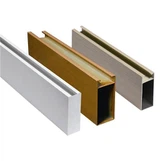
As a supplier of aluminium veneer, I often get asked about the chemical stability of this remarkable material. Aluminium veneer has become a popular choice in various construction and decoration projects due to its many advantages, and understanding its chemical stability is crucial for both our customers and us in the industry.

Understanding Aluminium's Natural Properties
Aluminium is a highly reactive metal on its own. When exposed to air, it immediately reacts with oxygen to form a thin layer of aluminium oxide (Al₂O₃) on its surface. This oxide layer is extremely stable and acts as a protective barrier, preventing further oxidation of the underlying aluminium. The thickness of this oxide layer can range from a few nanometers to several micrometers, depending on the environmental conditions and the surface treatment of the aluminium veneer.
The chemical reaction for the formation of aluminium oxide is as follows:
4Al + 3O₂ → 2Al₂O₃
This natural oxidation process is what gives aluminium its inherent resistance to corrosion. The aluminium oxide layer is chemically inert and can withstand a wide range of environmental conditions, including exposure to moisture, oxygen, and many common chemicals.
Factors Affecting the Chemical Stability of Aluminium Veneer
Environmental Conditions
The chemical stability of aluminium veneer can be significantly affected by the environmental conditions in which it is installed. In a clean, dry environment, the aluminium oxide layer remains intact, providing long - term protection against corrosion. However, in harsh environments such as coastal areas where there is a high concentration of salt in the air, or in industrial areas with high levels of pollutants, the stability of the oxide layer can be compromised.
Salt in the air can react with the aluminium oxide layer, breaking it down and exposing the underlying aluminium to further corrosion. Pollutants such as sulfur dioxide (SO₂) and nitrogen oxides (NOₓ) can also react with the oxide layer, forming acidic compounds that can dissolve the protective coating.
Surface Treatment
Surface treatment plays a vital role in enhancing the chemical stability of aluminium veneer. There are several common surface treatment methods, including anodizing, powder coating, and painting.
Anodizing is an electrochemical process that thickens the natural aluminium oxide layer. By immersing the aluminium veneer in an electrolyte solution and applying an electric current, a thicker and more durable oxide layer is formed. Anodized aluminium veneer has excellent corrosion resistance and can withstand harsh environmental conditions.
Powder coating involves applying a dry powder to the surface of the aluminium veneer and then heating it to form a hard, protective coating. Powder - coated aluminium veneer is available in a wide range of colors and finishes, and it provides good protection against corrosion, UV radiation, and abrasion.
Painting is another popular surface treatment method. High - quality paints can provide a protective barrier against chemicals and environmental factors. However, the durability of the paint coating depends on the quality of the paint and the application process.
Chemical Resistance of Aluminium Veneer
Aluminium veneer has good chemical resistance to many common chemicals. It is resistant to weak acids and bases, as well as many organic solvents. However, it is important to note that aluminium can react with strong acids and bases.
For example, aluminium reacts with hydrochloric acid (HCl) to produce aluminium chloride (AlCl₃) and hydrogen gas:
2Al + 6HCl → 2AlCl₃+ 3H₂
It also reacts with sodium hydroxide (NaOH) to form sodium aluminate (NaAlO₂) and hydrogen gas:
2Al + 2NaOH + 2H₂O → 2NaAlO₂+ 3H₂
Therefore, when using aluminium veneer in environments where it may come into contact with strong chemicals, appropriate surface treatments should be applied to enhance its chemical resistance.
Applications and Chemical Stability
Architectural Applications
In architectural applications, such as Aluminum Building Facade Wall, the chemical stability of aluminium veneer is of utmost importance. Facade walls are exposed to various environmental factors, including rain, sunlight, and air pollutants. A chemically stable aluminium veneer can maintain its appearance and structural integrity over a long period, reducing the need for frequent maintenance and replacement.
Interior Decoration
For interior decoration, Perforated Aluminum Veneer is often used. Although the interior environment is generally less harsh than the exterior, there may still be exposure to cleaning agents and other chemicals. A veneer with good chemical stability can resist damage from these substances, ensuring a long - lasting and attractive appearance.
Specialized Applications
In some specialized applications, such as in the food and beverage industry or in chemical processing plants, Marble Pattern Aluminum Panel may be used. In these cases, the chemical stability of the aluminium veneer is crucial to prevent contamination and ensure the safety of the products.
Ensuring Chemical Stability in Our Products
As a supplier of aluminium veneer, we take several measures to ensure the chemical stability of our products. Firstly, we carefully select high - quality aluminium alloys as the base material. Different aluminium alloys have different chemical compositions, which can affect their corrosion resistance.
Secondly, we offer a variety of surface treatment options to our customers. We work with experienced surface treatment partners to ensure that the anodizing, powder coating, or painting processes are carried out to the highest standards.

Finally, we conduct strict quality control tests on our products. These tests include salt spray tests, which simulate the corrosive effects of a coastal environment, and chemical resistance tests to ensure that the veneer can withstand exposure to common chemicals.
Conclusion
The chemical stability of aluminium veneer is a complex but important topic. Thanks to the natural formation of the aluminium oxide layer and the availability of various surface treatment methods, aluminium veneer can offer excellent corrosion resistance and chemical stability in a wide range of applications.
If you are considering using aluminium veneer for your next project, whether it is an architectural facade, interior decoration, or a specialized application, we are here to provide you with high - quality products and professional advice. Contact us to discuss your specific requirements and start a procurement negotiation. We look forward to working with you to achieve your project goals.

References
- ASM Handbook Committee. ASM Handbook, Volume 13A: Corrosion: Fundamentals, Testing, and Protection. ASM International, 2003.
- Aluminum Association. Aluminum Design Manual. Aluminum Association, 2015.
- Callister, William D., Jr., and David G. Rethwisch. Materials Science and Engineering: An Introduction. Wiley, 2016.