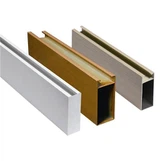
As a supplier of 6061 aluminum plates, I've witnessed firsthand the importance of quality standards in this industry. 6061 aluminum plate is a versatile and widely used material, and understanding its quality standards is crucial for both suppliers and customers. In this blog, I'll delve into the key quality standards for 6061 aluminum plates, explaining what they mean and why they matter.
Chemical Composition
The chemical composition of 6061 aluminum plate is the foundation of its quality. It determines the alloy's mechanical properties, corrosion resistance, and weldability. According to the ASTM B209 standard, the chemical composition of 6061 aluminum should fall within the following ranges:
- Silicon (Si): 0.4 - 0.8%
- Iron (Fe): 0.7% max
- Copper (Cu): 0.15 - 0.4%
- Manganese (Mn): 0.15% max
- Magnesium (Mg): 0.8 - 1.2%
- Chromium (Cr): 0.04 - 0.35%
- Zinc (Zn): 0.25% max
- Titanium (Ti): 0.15% max
- Aluminum (Al): Remainder
These elements work together to give 6061 aluminum its unique properties. For example, silicon and magnesium contribute to the alloy's strength and hardness, while copper enhances its corrosion resistance. By ensuring that the chemical composition of our 6061 aluminum plates meets these standards, we can guarantee consistent quality and performance.
Mechanical Properties
Mechanical properties are another important aspect of 6061 aluminum plate quality. They determine how the material will perform under different conditions, such as stress, strain, and temperature. The most common mechanical properties measured for 6061 aluminum plates include:
- Tensile Strength: The maximum amount of stress a material can withstand before breaking. For 6061 aluminum in the T6 temper, the minimum tensile strength is typically around 42,000 psi (290 MPa).
- Yield Strength: The amount of stress at which a material begins to deform plastically. In the T6 temper, the minimum yield strength of 6061 aluminum is usually around 35,000 psi (240 MPa).
- Elongation: The percentage increase in length of a material before it breaks. A higher elongation indicates better ductility. For 6061 aluminum in the T6 temper, the minimum elongation is typically around 8%.
These mechanical properties are tested using standardized methods, such as the ASTM E8 test for tensile properties. By adhering to these standards, we can ensure that our 6061 aluminum plates have the necessary strength and ductility for a wide range of applications.

Surface Quality
The surface quality of 6061 aluminum plates is also an important consideration. A smooth, defect-free surface not only enhances the appearance of the material but also improves its corrosion resistance and weldability. Common surface defects in 6061 aluminum plates include:
- Scratches: These can occur during handling, processing, or transportation. Deep scratches can weaken the material and reduce its corrosion resistance.
- Dents: Dents can be caused by impacts or improper storage. They can affect the flatness of the plate and make it difficult to use in certain applications.
- Oxidation: Oxidation can occur when the aluminum is exposed to air and moisture. It can cause the surface to become dull and reduce the material's corrosion resistance.
To ensure high surface quality, we use advanced manufacturing processes and strict quality control measures. Our 6061 aluminum plates are inspected for surface defects before they are shipped to customers. If any defects are found, the plates are either repaired or rejected.
Dimensions and Tolerances
Accurate dimensions and tolerances are essential for the proper fit and function of 6061 aluminum plates. The dimensions of the plates, such as thickness, width, and length, should be within the specified tolerances. Tolerances are the allowable variations in dimensions from the nominal values.
The tolerances for 6061 aluminum plates are specified in the ASTM B209 standard. For example, the thickness tolerance for plates up to 1/4 inch thick is typically ±0.005 inches. By adhering to these tolerances, we can ensure that our 6061 aluminum plates meet the requirements of our customers' applications.
Heat Treatment
Heat treatment is a critical process in the production of 6061 aluminum plates. It is used to improve the mechanical properties of the material by changing its microstructure. The most common heat treatment for 6061 aluminum is the T6 temper, which involves solution heat treatment followed by artificial aging.
During solution heat treatment, the aluminum is heated to a high temperature (usually around 980°F or 527°C) and held at that temperature for a specific period of time. This allows the alloying elements to dissolve in the aluminum matrix. After solution heat treatment, the aluminum is quenched rapidly to room temperature to lock in the dissolved elements.
Artificial aging is then carried out by heating the aluminum to a lower temperature (usually around 320°F or 160°C) and holding it at that temperature for a specific period of time. This causes the dissolved elements to precipitate out of the aluminum matrix, forming small particles that strengthen the material.
By following the proper heat treatment procedures, we can ensure that our 6061 aluminum plates have the desired mechanical properties. Our heat treatment processes are carefully controlled to ensure consistency and quality.

Applications of 6061 Aluminum Plates
6061 aluminum plates are used in a wide range of applications due to their excellent combination of strength, corrosion resistance, and weldability. Some common applications include:
- Aerospace: 6061 aluminum is used in aircraft structures, such as wings, fuselages, and landing gear components, due to its high strength-to-weight ratio.
- Automotive: It is used in automotive parts, such as engine blocks, wheels, and suspension components, for its lightweight and corrosion-resistant properties.
- Marine: 6061 aluminum is suitable for marine applications, such as boat hulls, decks, and fittings, because of its good corrosion resistance in saltwater environments.
- Construction: It is used in construction for building facades, structural frames, and curtain walls, as it provides a strong and durable solution.
Quality Assurance
As a supplier of 6061 aluminum plates, we are committed to providing our customers with high-quality products. We have a comprehensive quality assurance system in place to ensure that our products meet or exceed the relevant standards.
Our quality assurance system includes the following steps:
- Raw Material Inspection: We carefully inspect all incoming raw materials to ensure that they meet the required chemical composition and other specifications.
- In-Process Inspection: During the manufacturing process, we conduct regular inspections to monitor the quality of the products. This includes checking the dimensions, surface quality, and mechanical properties.
- Final Inspection: Before the products are shipped to customers, we conduct a final inspection to ensure that they meet all the quality requirements.
In addition to our internal quality control measures, we also work closely with independent testing laboratories to verify the quality of our products. This gives our customers peace of mind knowing that they are getting high-quality 6061 aluminum plates.
Contact Us for Purchasing
If you are in the market for high-quality 6061 aluminum plates, we would be happy to assist you. Our company offers a wide range of 6061 T6 Aluminum Sheet and Aluminium 6061 T6 Plate products that meet the strictest quality standards.
Whether you need a small quantity for a specific project or a large order for ongoing production, we can provide you with the right solution. Our team of experts is available to answer your questions and help you select the best product for your needs.
Contact us today to discuss your requirements and get a quote. We look forward to working with you and providing you with the highest quality 6061 aluminum plates.
References
- ASTM B209 Standard Specification for Aluminum and Aluminum-Alloy Sheet and Plate
- Aluminum Association Technical Data Sheets on 6061 Aluminum Alloy